Siblings
Being part of a family where one of your brothers or sisters has a disability can be really difficult and often stressful. You may also think it’s really unfair! At the same time, it can also be rewarding, fun, and a huge source of inspiration.
Often it seems as though your parents spend way too much time with your brother or sister with PWS, and not enough with you. It may seem as though they are getting all the attention and you’re getting punished by not being allowed to eat what you want, or always having to watch out for your sister or brother.
It doesn’t seem fair, and it’s not! So the whole family will have to make adjustments, learn new skills to help support your brother or sister, and that requires lots of patience and understanding.
Your friends will have to learn to understand as well. It all seems so tough to begin with, and it’s natural to have a love-hate relationship just as it’s natural to have a whole heap of other emotions all jumbled up at the same time. On top of this, you have all the other problems of life-school, growing up, parents, responsibilities, peer pressure and acceptance, and then as you grow older, there’s a bucket-full of hormones that need stabilising! The problem is, how can you learn to integrate all this when it just seems impossible?
Advice for Parents
Parents need to realise that it is a huge ask for the sibling as he or she tries to make their own way in the world, just as it is a huge task for parents to oversee and make sure that each child gets the kind of loving support that they need to become the individual they can.
In the case of your child who is brother or sister to the one with PWS, how much do you tell them? What do they need to know, and how do you support them? Often siblings have very conflicting and confusing feelings about their brother or sister. As they grow older and have more understanding, they may be embarrassed by the abnormal eating behaviours and resent the need for controlled access to food. They may find it difficult or impossible to ask their friends home and this may generate resentment towards their brother or sister.
Children absorb information at different levels – too much at one time and they selectively retain some and ditch some.
The pre-school child doesn’t need as much information as the schoolchild, who doesn’t need as much as the teenager and so on. Children ask questions, when they feel the time is right, and it is up to us as parents to help them understand the unique needs of PWS. The important thing is that you give them time to question and answers they can understand.
It is important that the family works together to support the child with PWS, especially when he or she starts to be more interested in looking for food. This is when parents need to discuss the importance of managing the dietary needs of PWS with other children in the family (and also their friends, and the whole wider family) and stress the importance of their brother or sister’s special needs. If siblings understand about the syndrome, they may be more willing to put up with, and help with, all the limitations on treats, food accessibility etc. that it takes to manage the special dietary needs. Rewarding the other siblings with extra food is not a great idea (unless it’s away from the house), but spending time with them is. Letting them do things without their brother or sister with PWS can make them feel valued and important; and at the same time will give one-on-one time with the other child. Keep a good balance between time spent and rewards given.
Although each family will tackle this subject in the way that they feel will work best for them, parents may still need to help their other children to express their feelings in the knowledge that it isn’t wrong to feel embarrassed, awkward, resentful, or even guilty towards their sister/brother.
As the brother or sister grows older, the changes and development in their sibling with PWS will become more obvious and good parenting skills will be called on more and more to settle arguments (“it’s not fair-you always let Jason get away with everything”), and pour oil on troubled waters.
When everything seems “unfair”, it’s a good strategy for the parent to go to their child at bedtime, sit on the bed and allow them time to talk about what happened during the day and why it wasn’t fair. Often you can ask the sibling what he or she thinks you should have done, or what they might have done if they’d been the parent. You may be surprised at the answers and encouraged by the child’s actual understanding of the situation. Making the brother or sister feel special because they are taken into your confidence and asked to help with their sibling with PWS can often be the key. It may not work the next time the same situation arises, but continued talking about it will help reinforce the message that both of you are learning to help Jason to grow up in a world that is often strange and uncertain.
It is sensible to treat your child with PWS as much as a normal member of your family as possible. Sure they get tired, more irritable, more hungry etc, but they can still help around the place with the chores. Make allowances, but don’t make a rod for your own back. Be kind to yourself as a parent, too! Make time for special dates-write them up large on your calendar even if it’s just going to the movies, or a coffee with a friend, it is important for your own sense of wellbeing that you do something for yourself. Try to set goals for yourself that are purely your own.
Join an internet group of age-related parents with kids who have PWS (there are plenty on the net), most of them have been through what you are going through and can give great support and advice.
No one said parenting is easy – it’s not. It’s hard enough for anyone and the extra challenge of raising a child with PWS has its share of bad days. We all know the feeling of being the constant meat in the sandwich, or ‘someone’s mum, wife, partner’ rather than the person we may have otherwise have been. Dwell on the good days!
< Back to Information for Families
International Community
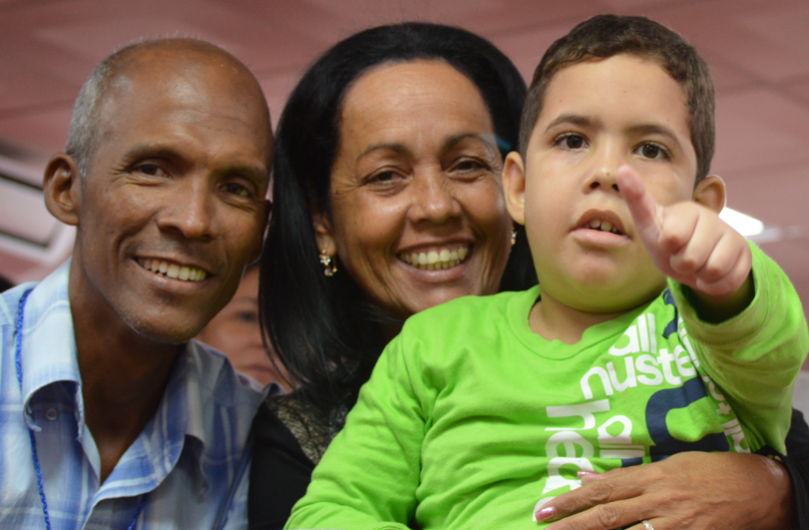
IPWSO was established so that PWS associations, families, clinicians and caregivers around the world could exchange information and support and have a united global voice under one umbrella.
Information for Medical Professionals
The latest medical and scientific research and information, plus guides into common medical issues affecting people with PWS.
Paediatric Association of Nigeria - 57th Annual Scientific Conference
IPWSO was proud to support a dedicated PWS symposium at the 57th Annual Scientific Conference of the Paediatric Association of Nigeria (PAN) Conference held 21-23 January 2026 in Ogun State.
Famcare Board Member, Dr Elizabeth Oyenusi, presented on the clinical features, diagnosis, and management of PWS, while Dr Oluwakemi Ashubu shared the first genetically confirmed case of PWS in the country - an important milestone. The session attracted over 104 delegates and sparked a lively discussion.
IPWSO also hosted an exhbition table throughout the 3-day conference, distributing educational materials and engaging directly with healthcare professionals.
We are hugely grateful to Dr Oyenusi, Dr Ashubu and Dr Oladipo (Senior Registrar) for their support in making this educational oureach possible - helping to strengthen awareness and improve early diagnosis of PWS in Nigeria. Funding for this event was kindly provided by Friends of IPWSO (USA).
Global Newborn Society Inaugural Conference, Sweden
The Global Newborn Society’s 1st Conference took place in Uppsala and Stockholm, Sweden, from 2-4 November 2025, marking an exciting milestone for the organisation’s international community.
We were delighted that Dr Susanne Blichfeldt was invited to deliver a plenary lecture on behalf of IPWSO, titled “Neonatal Hypotonia: Clinical Features Seen in PWS That Can Help Differentiate It from Other Congenital Disorders with Similar Symptoms.”
The inaugural event brought together a diverse audience of physicians, nurses, and social care leaders from around the world. The programme was wide-ranging and stimulating, featuring cutting-edge discussions on newborn health, early diagnosis, and innovative care practices - setting a strong foundation for future collaboration within this growing global network.
ASPED 2025, Dubai, UAE
The 6th conference of the Arab Society for Paediatric Endocrinology and Diabetes was held in Dubai over two days on the 26th and 27th September 2025. IPWSO was invited to be a partner and to present at a session on PWS. The conference was attended by over 400 paediatric endocrinologists from more than 20 countries in the Middle East and North Africa. Charlotte Hoybye and Tony Holland attended and presented on behalf of IPWSO and Dr Sarah Ehtisham described her experience seeing patients with PWS in the United Arab Emirates. IPWSO hosted a stand for the whole conference.
In conversation many attendees reported seeing people with PWS and described the challenges they faced, particularly with the management of behaviour problems. Some felt nervous about starting growth hormone as they had had no experience prescribing it to infants with PWS.
Approximately 100 attendees joined the IPWSO mailing list and attendees were very keen to gain knowledge about PWS. Numerous memory sticks with information on PWS and printed material in English and Arabic were taken. Some attendees talked about establishing national or regional PWS Associations.
This was an extremely positive experience and hopefully attending this meeting has laid the groundwork for IPWSO to engage more fully in the Region in the future. We were very well looked after, and the organisers were excellent hosts.
EPNS 2025, Munich, Germany
Together with parents and representatives from the Prader-Willi-Syndrom Vereinigung Deutschland, we were proud to host a PWS exhibition stand at the 16th Congress of the European Paediatric Neurology Society, held in Munich from 8-14 July 2025. The event welcomed over 2,000 medical professionals from around the world.
We had the pleasure of engaging with attendees from Türkiye, Iraq, Palestine, Croatia, Moldova, the Philippines, Ukraine, North Macedonia, Kazakhstan, Armenia, and many local specialists.
Dr. Stefani Didt, Gesellschafter at Katholische Jugendfürsorge der Diözese Augsburg, kindly supported us at the stand and provided expert responses to clinical enquiries. We hope these international connections will contribute to raising awareness about IPWSO’s work, particularly in improving access to genetic testing in underserved regions.
We also highlighted the new treatment for hyperphagia and shared our recent publication, "Improving Mental Health and Well-being for People with PWS."
Sincere thanks to our colleagues from PWS Vereinigung Deutschland and to Dr. Didt for their invaluable support.
ESPE-ESE 2025, Copenhagen, Denmark
IPWSO was honoured to participate in the recent Joint Congress of the European Society for Paediatric Endocrinology (ESPE) and the European Society of Endocrinology (ESE), held in Copenhagen from 10–13 May 2025. This important event provided an invaluable opportunity to raise awareness of Prader-Willi syndrome (PWS) among a broad international medical audience.
IPWSO was represented by our CEO, Margaret Walker, along with Dr Charlotte Höybye from Sweden and Dr. Susanne Blichfeldt from Denmark—both esteemed members of IPWSO’s Clinical and Scientific Advisory Board.
Dr Blichfeldt noted that this congress is a major event in the clinical academic calendar and has a particular significance as it marks the first-ever joint meeting of these two prominent societies. Despite its European designation, the congress attracted participants from around the globe, including delegates from the Middle East, Africa, the United States, Japan, Australia, and New Zealand.
IPWSO’s educational booth was strategically positioned within the Patient Advisory Group area dedicated to rare disease organisations. As part of the programme, we were invited to deliver a 30-minute presentation during the Patient Voices Session. Dr Charlotte Höybye and Dr Susanne Blichfeldt presented on Prader-Willi syndrome (PWS), with a focus on genetics, endocrinology, and clinical manifestations. Our presentation, along with many others, was recorded and is now available on demand via the ESPE-ESE congress platform.
PWS was prominently featured throughout the congress. In a session on the transition of care for patients with rare diseases, Dr. Maithé Tauber (Toulouse, France) discussed the specific challenges associated with the transition period in PWS. She emphasized the need for multidisciplinary care and ongoing specialist follow-up in adulthood through dedicated PWS clinics.
Another session addressed medical and clinical management in both children and adults with PWS, again highlighting the critical importance of a smooth transition from paediatric to adult care and the role of specialised clinics. The session included an in-depth discussion on hyperphagia in PWS, exploring its profound impact on individuals and their families. Management strategies were reviewed, and a new medication, Vykat, was presented as a potential treatment for hyperphagia.
In addition, there was a strong presence of scientific posters on PWS from various countries, covering a wide range of topics such as hormonal therapies, genetic findings, ageing, and guidance for families. A total of 33 posters focused on PWS, reflecting a growing global interest and commitment to advancing knowledge and care in this area.
We were greatly encouraged by the high level of engagement and the visibility given to PWS throughout the congress. This increased awareness brings hope that more children will be diagnosed earlier and receive appropriate, specialised medical care from childhood through to adulthood.
ASPAE 2025, Abidjan, Côte d’Ivoire
After Yaounde (Cameroon 2023) and Alger (Algeria 2024), IPWSO was pleased to be present at the 16th Annual Congress of the African Society of Paediatric and Adolescent Endocrinology (ASPAE), at the invitation of Dr Kouamé Hervé Miconda, Programme Co-organiser. Prior to the main conference, IPWSO, in partnership with Dr Micondo, organised a dedicated PWS workshop which attracted 60 professionals - paediatricians, endocrinologists, doctors, students, nurses, and midwives.
MENA 2025 Abu Dhabi, UAE
The Middle East and North African (MENA) conference for Rare Diseases was held in Abu Dhabi, United Arab Emirates, between 17th and 20th April 2025. Tony Holland represented IPWSO at this meeting and presented a poster about our work. The conference was attended by clinicians, genetic councillors, scientists, and other health disciplines from across North Africa and the Middle East. The conference was in English as many clinicians in this part of the world are from elsewhere and not Arabic speakers. The conference was of a very high standard and ranged broadly across many rare genetically determined conditions as well as there also being discussions about how to develop services and how to seek approval for new treatments. Our poster was one of five that was selected as the best posters exhibited at the meeting. Tony said, "My experience of the conference was very positive and I am sure there are opportunities that can be built on. Being part of the endocrinology meeting, which is likely to be attended by endocrinologists from across the whole region, provides a wonderful opportunity to engage more fully with clinicians most likely to see people with PWS".
Kenya Paediatric Association Annual Scientific Conference, Monbassa, Kenya
Dr Menbere Kahssay and Dr Renson Mukhwana, Aga Khan University Hospital, Nairobi represented the Kenyan team and, together with Drs Constanze Laemmer and Dr Charlotte Höybye, managed the IPWSO educational booth at our first meeting in this region.
A dedicated session on PWS significantly raised awareness and knowledge about the syndrome among paediatricians and allied health professionals.
Dr Kahssay said, "We were able to have track and plenary session and four days interaction with the participants at the booth.
The PWS session focused on case experiences and regional differences in PWS management. Thanks to IPWSO’s support, Drs Charlotte Hoybye and Constanze Lammer joined as expert speakers, sharing their valuable experiences in managing PWS across the neonatal, childhood, and adult stages".
Dr Menbere Kahssay and Dr Renson Mukhwana presented genetically confirmed local cases, highlighting diagnostic challenges and treatment approaches.
Third Biennial Rare Diseases Conference, Rare X, Johannesburg, South Africa
Karin Clarke and Molelekeng Sethuntsa organised the IPWSO exhibition table at this event in Johannesburg from 14-17 February 2024. Molelekeng attended the conference and reported on the excellent discussions that focused on the challenges of early diagnosis, especially in Africa, centres of excellence, and ways that the Department of Health, WHO and RDI can improve detection and treatment of rare diseases.
6th RARE Summit 2023, Cambridge, UK
Tony Holland, President, and Agnes Hoctor, Communications and Membership Manager, represented IPWSO at the 6th RARE Summit organised by Cambridge Rare Disease Network on 12 October, 2023.
MetaECHO® 2023, Global Conference, Albuquerque, New Mexico
The 5th MetaECHO® Global Conference took place from September 18-21 in Albuquerque, New Mexico. It celebrated 20 years of ECHO programmes and brought together ECHO leaders, partner teams, government officials, funders, policy makers, and industry experts to share retrospective work and thoughts on the future of ECHO. Our President, Tony Holland, presented a paper on “A Global ECHO Programme for the Rare Disorder – PWS", based on IPWSO’s Project ECHO programme.
EPNS 2023, Prague, Czech Republic
The 15th European Paediatric Neurology Society Congress (EPNS) took place from 20-24 June. Tünde Liplin, PWS Hungary, and Hana Verichová, PWS Czechia, represented IPWSO. Twenty-two people from countries including Georgia, Israel, Lithuania, Turkey, Italy, Slovakia, Romania, Netherlands, Bosnia Herzegovina, Belgium, Argentina, Norway, Serbia, India, and Australia subscribed to the "Stay in touch with IPWSO!" contact list. Tünde reported that many people came to the stand just to inquire and chat, the majority of whom were hearing about IPWSO and our work for the first time.
ECE 2023, Istanbul, Turkey
The European Congress of Endocrinology (ECE) took place from 13-16 May. We hosted an information table and were represented by IPWSO advisers, Constanze Lämmer and Charlotte Höybye, and also our Communications and Membership Manager, Agnes Hoctor. We were pleased to be given the opportunity to present on IPWSO and PWS at the Hub Session. The most exciting and important element for us was that the Turkish location meant that delegates came from many countries in Middle East as well as Europe.
ASPAE 2023, Yaoundé, Cameroon
We hosted an educational booth and presented at the round table on Obesity at this important Endocrinology conference hosted by the African Society of Paediatric and Adolescent Endocrinology (ASPAE) from 9-10 February. Read our blog about our visit.
ECE 2021, Online
We hosted an educational booth and gave a presentation at the European Congress of Endocrinology in May 2021.
ESPE 2019, Vienna, Austria
We exhibited at the European Society of Paediatric Endocrinology (ESPE) Conference in Vienna, Austria, which took place in September 2019. Find out more in our blog.
ECE 2019, Lyon, France
We exhibited at the European Congress of Endocrinology in May 2019.
Dr Ashubu discussing IPWSO's educational materials with delegates at our booth.
IPWSO was honoured to be invited to present at the Global Newborn Society's Inaugural Conference.
Dr Sarah Ehtisham presenting at ASPED 2025 followed by a panel discussion.
Colleagues from PWS Vereinigung Deutschland help manage our PWS stand at EPNS 2025. Many thanks to all the parents and carers for their invaluable support!
Dr Charlotte Höybye (Sweden) and Dr. Susanne Blichfeldt (Denmark) presenting at the ESPE-ESE Patient Voices Session - May 2025
Dr Blichfeldt and Margaret Walker (CEO) managing our IPWSO educational booth.
François Besnier, IPWSO's Vice President, meeting some of our travel fellowship delegates at ASPAE 2025.
IPWSO's poster achieves top award!
Many thanks to Drs Constanze Laemmer, Menbere Kahssay, Charlotte Höybye and Renson Mukwana for all their support at KPA 2025.
What is PWS?
Prader-Willi syndrome is a complex genetic condition. Various studies have shown that between 1 in 15,000 to 25,000 children are born with Prader-Willi syndrome and it affects all races and both sexes equally.
Free Diagnosis
If you suspect your patient has Prader-Willi syndrome, based on the clinical signs and symptoms, but are unable to access testing in your country, then you may be able to access free testing.